Kansas City’s Nonprofit Voice!
Sharing the stories of local nonprofits and connecting them with the community! We talk with philanthropists, volunteers, community activists, executive directors, and non-profit lovers from the Kansas City nonprofit community. Be seen, be heard with KC Cares! Kansas City’s Nonprofit Voice!
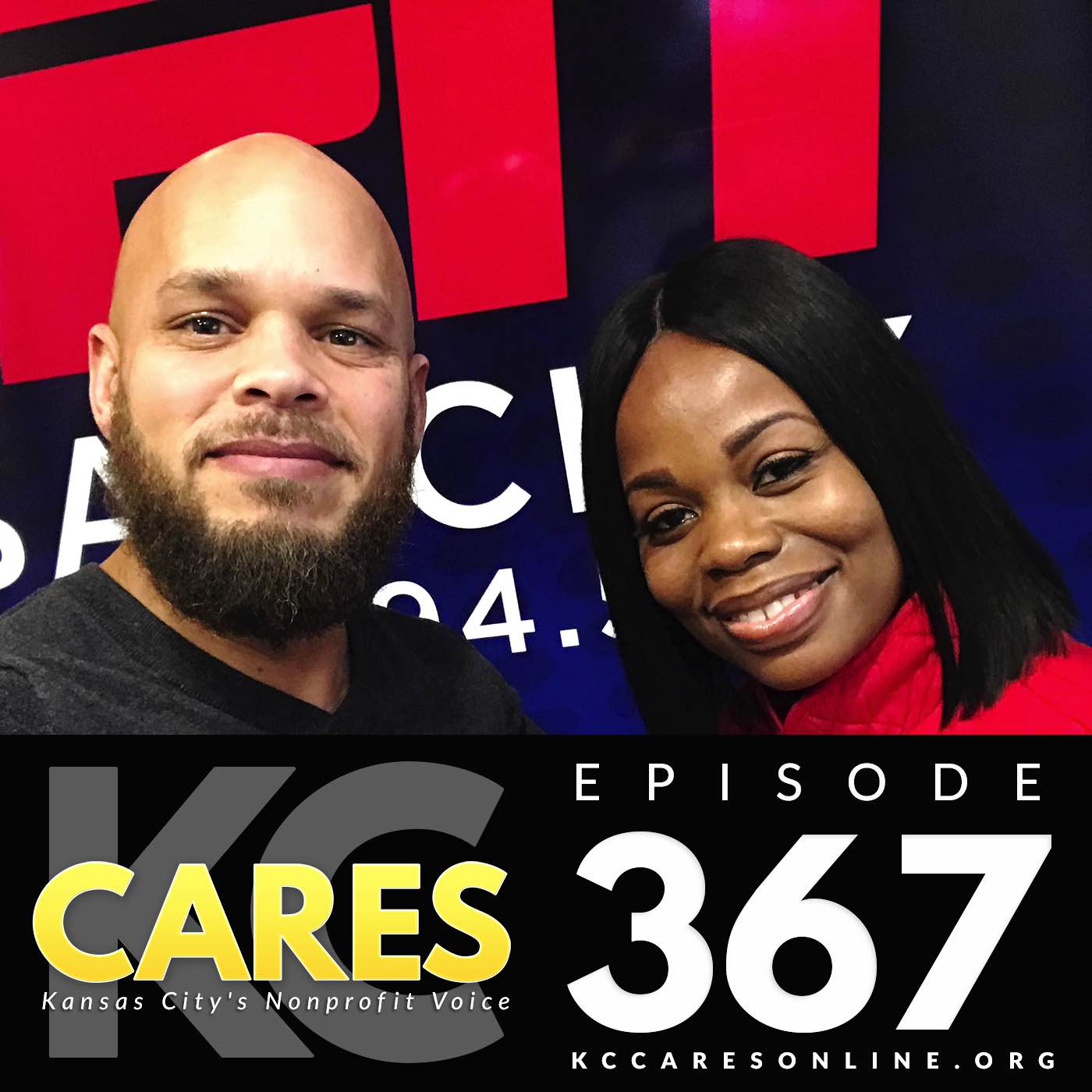
On Episode 367 of KC Cares, we talk with Candance Wesson with The Help KC! Listen now!
•••••••••••••••••••••••••••••••
The Help KC
Candance Wesson, Founder
The Help(KC) focuses on assisting women who were formerly incarcerated and or have a felony conviction(s).
thehelpkc.org
•••••••••••••••••••••••••••••••
Find us on
Facebook:@ Kccaresradio
Twitter: @kccaresradio
Instagram: @Kccaresonline
•••••••••••••••••••••••••••••••
Also available on
Itunes || Spotify || Stitcher || Soundcloud || Youtube
•••••••••••••••••••••••••••••••
KC Cares, Kansas City’s nonprofit voice, tells the stories of Kansas City nonprofits and connects them with the community.
Produced by Charitable Communications
In partnership with the Kauffman Foundation
Think. Do. Be Uncommon.
Trancription of Intereview:
Bobby Keys: [00:00:12] Welcome back to KC Cares, Kansas city’s nonprofit voice. I’m Bobby keys. We tell the stories of Kansas city nonprofits and the people behind them, helping them reach new donors, new people, and grow their cause and, , you know, continue their passion.
Well, thank you to the CAPA foundation for generously underwriting us. We appreciate you and we appreciate everything we do for Kansas city. So this is a great show. We’ve got, Ruth is often about, she’s out and she’s always doing things across the world. Seems like she’s saving maybe saving seals in San Francisco or something.
She’s doing so much good, but. We’ve got a lot of good here today. , we’ve got a couple of nonprofits that, , we’ve never had on the show before. So it’s always great to get new people and, , introduce Kansas city to the new nonprofits out there. This one has to do with, , it’s a nonprofit that primarily focuses on assisting women who were formerly incarcerated or have, you know, felony convictions.
, we want to welcome Candice Wesson. Is it Candace,
Candance: [00:01:13] Candace,
Bobby Keys: [00:01:14] Candace, Wesson, , and this with help KC the help KC,
Candance: [00:01:17] right? Yes, that’s right.
Bobby Keys: [00:01:18] Candace, welcome.
Candance: [00:01:20] Thank you. How are you doing today? I am awesome. Yeah. Yeah.
Bobby Keys: [00:01:24] No, you did you start this
Candance: [00:01:26] nonprofit? I did. Okay. To,
Bobby Keys: [00:01:29] let’s learn about the background. I do it.
What happened? Well, they’re like, tell us what the PR, what you, what you guys do, and then let’s, let’s kind of go into how to get
Candance: [00:01:35] started. Okay. So the foundation is this. I myself, I was convicted of a felony. , I was a first time offender of a nonviolent victimless crime. , my crime, . Well, it was a text crime pretty much, and I was on the case with two other individuals.
Okay. I’m again, a first time offender, no victims, anything like that. So I was sentenced to 20 months in a federal institution. 20 months. 20 months. Yes. First time. Absolutely. And then to add insult to injury. , three weeks after, you know, reporting to this prison. I was told I was pregnant three weeks after being there.
So not only did I go to prison for the first time, but I was pregnant my entire sentence. , I was transferred to three different institutions. , and I was able to have my baby and I was able, family was able to come and get him. Now I was one of the fortunate cases because most of the women who have their babies in prison, they have to turn their babies over to the state because there no one to care for them.
Wow.
Bobby Keys: [00:02:37] And so when that happens. Well for the people that who don’t have family, do you lose all rights to the child forever?
Candance: [00:02:44] I believe so. And then to even try to get the child back, it’s a task. It’s a task. Yeah. So once I was released from prison, I came back to Kansas city. I had to report to yet another institution, what they called the halfway house, the transitional house.
And. When I got there, there was no resources for people like me. And what I mean by that is someone who’s a first time offender, you know, don’t know how to deal with the fact that I’m now branded with a felony for the rest of my life. And so there was no resources. So I’m out searching for resources. And the name of the game when you report to the halfway house is to get a job, get a job, get a job.
However, there was no resources to help us do just that
Bobby Keys: [00:03:25] now. And especially, right, I don’t know the law, but how it works, but in a little bit. So if you have a felony, it doesn’t, a felony shows up and it doesn’t, it doesn’t say a nonviolent
Candance: [00:03:38] felony. It’s just a felony,
Bobby Keys: [00:03:41] which is ridiculous. Cause then you’re just lped in
Candance: [00:03:44] to people who are
Bobby Keys: [00:03:45] violent criminals.
Candance: [00:03:48] That is true. Absolutely. And so they’re telling us get a job and then they threatened to send us back to prison if we don’t do just that. So again, there was no resources, there was nothing available to us to help us do just that. So I began searching for this. Organization. I said, Hey, where’s the organization that can help someone like me?
Where’s that person or that organization that can tell me how to cope with rejection? Because again, you’re dealing with someone who’s never had to tell an employer that I have a felon. Yeah. So where is that? Where’s that? Where’s those resources? And they wasn’t available. So that’s where the help came about because I remember going on countless interviews.
Actually, I stopped counting after the 22nd interview. Wow. Because it was just frustrating. It’s like being told no, because you have a felony. So once that took place, I just decided to help. And you know what they say? The person closest to the problem is closest to the solution. Yeah. So I decided to become the solution.
So that’s where the help came from.
Bobby Keys: [00:04:46] I like that. Thank you. I’m going have, we’re going to have, we’re going to, you know what we’re going to use that I’m on. That’s going to be the tag. I like that because we talk about that all the time. It’s like, you know, nonprofits like this are started out of, you know, tragedies, you know, sometimes and, and tough position.
It’s like a necessity. And somebody just like. All right. This is not fair. This is, we need somebody to help us because that is not fair because not all fell on this. You know, not all people who commit felonies or are violent or bad people, you make a mistake. There’s sometimes you just make a mistake and it’s only one mistake.
Like, right.
Candance: [00:05:21] Exactly. And my fight is, is clear is there were other alternatives, you know, because me going to prison, it didn’t decrease. , crime or violence in Kansas city. I wasn’t a threat to Kansas city, so there was other alternatives, and I just don’t believe that if you’re convicted of a felony, a nonviolent victim was crime, that you should be sent to prison.
That’s not the only source. And so like now our prison systems are overcrowded with those who are convicted of nonviolent offenses.
Bobby Keys: [00:05:50] No. You said you had got, you got, you went for. , 20 months you were supposed to go for 20 months. Did you get out? Did you get out early or did you have to
Candance: [00:05:57] serve all of it?
I spent 11 months inside of a federal institution and then seven, six months inside of a halfway house.
Bobby Keys: [00:06:05] And that inside the federal institution is that, you know, is that, , like, , when you go for tax. You know, is that the same jail you’re sitting in the same jail with everybody else?
Candance: [00:06:21] I was in a prison with murderer.
Bobby Keys: [00:06:22] Unless you’re rich. Right.
Candance: [00:06:26] But I wasn’t that rich. So
Bobby Keys: [00:06:29] you had to do like regular people,
Candance: [00:06:31] the regular folks.
Bobby Keys: [00:06:33] Wow. You know, people don’t realize that, you know, that’s, that’s something that just kinda gets brushed over, like, Oh, you know, the disparity one and the classism. But the fact that, you know, you get lped in and you lose all these privileges cause you, you don’t get the vote.
Or do you get to vote?
Candance: [00:06:49] Your voting rights are restored once you’re done with parole and probation. Okay. Yeah. So like myself, I had three years of parole, and so once that was finished, I was able to register to vote again and I was able to vote again.
Bobby Keys: [00:07:01] So you got out of prison, you gotta you, you served your time, you did your thing, you got out and you started this, you like something needs to change.
, and you started out, what were the first steps that you took.
Candance: [00:07:13] So the first step that I took, I did my research. I wanted to make sure that there was not an organization, , for exclusively for women in Kansas city. Not only that, in Jackson County as a whole. Now there is a few organizations there like in st Louis or some sort, but they’re not here, right here in the heart of the city.
So I did my research first. , then I began to seek different avenues on how to go about. Starting this organization, we began reaching out to different funders, different sponsors and things like that. Now, it was not easy because again, formerly incarcerated, marginalized women is, it’s a topic that’s not talked about here and it’s not, and so it wasn’t easy to get to support, but the city manager of Kansas city, Troy Sheltie, he was the first yes that we received.
We went into his office, we had a meeting, and he was like, yes, let’s do it. So that was my green light and I went after it.
Bobby Keys: [00:08:07] So what’d you do to prepare for them? That goes at like, did you, I mean like, I like the details, like, you know. Well, you just, did you take a big old proposal? Was it, how’d you fill it with facts?
I mean, like how did you, how did you get him to say yes? We’re like people that are, that are trying to understand like I, cause there’s a lot of people that go out and they F they fall on their face, right. Whether, you know, ask after, ask after ask, and that’s what you gotta do right.
Candance: [00:08:29] And the crazy thing about that, I did not go into this office with a proposal, any type of paperwork.
I just went with all my, with the details and my personal experience with the criminal justice system. And he was like, yeah, let’s do it. Absolutely. It was basically, that’s what spoke for me, was the passion. Absolutely. Absolutely.
Bobby Keys: [00:08:45] So, so you gotta go and he said yes. . What was it? What happened after that?
How many people were there? You started seeing more and more people that were like, you know, they’re in the same situation.
Candance: [00:08:56] Yes. So we began to reach out to probation and parole offices. We would go there, we would drop off our pamphlets and things like that. So our first, , co client that we receive, her name is Latanya.
She was like, I heard about you on the radio. Cause my husband has a radio show that he does on 1590 I’m like, okay. So then after her was another and it was another. So and to date we’ve assisted I think 189 women. So that lets me know that that was always a problem here in Kansas city. And I was just, I just so happen to be the solution.
Bobby Keys: [00:09:27] Wow. Do you know how many, how many women are incarcerated in Kansas
Candance: [00:09:30] city? In Kansas city alone. I do not.
Bobby Keys: [00:09:33] Oh, I, I, yeah, I, you know, cause I’m curious, like, you know, all those people that are there, I want to know the percentage of nonviolent felonies versus felonies, you know, because there’s a lot of people that.
That are, that have that stigma and you’ve got to kind of change the stigma.
Candance: [00:09:50] Absolutely. Right.
Bobby Keys: [00:09:51] Absolutely. And it’s just not, it’s just not, you can’t change the stigma just for rich people. So it’s good.
Candance: [00:09:56] Exactly.
Bobby Keys: [00:09:57] You gotta be everybody. So you gotta you have, do you have any people working for you? Is this now you just kind of doing this yourself or how, how’s that?
Candance: [00:10:05] You know, I am a one woman show, however, we do have volunteers, but they’re like in and out. And the deal is you have to have. Funding resources, you have to have money because there are now people that wants to get paid for the time that they take out passion alone. For me, I can do it off of passion, but there’s others that say, Hey, I have to pay bills.
And I understand that and I understand. So, you know, we’re always looking for funding resources to where we can expand our budget to where we can bring on people permanently. We need case managers, we need counselors because these women need those types of resources.
Bobby Keys: [00:10:39] Yeah. So do you have, how do you get, , I guess the funding now, is it, are you, you, you surviving off of donations?
Are you surviving off of kind of just grants or like how do you, like what do you need to, to, to thrive?
Candance: [00:10:55] Right now we are funded through the city of Kansas city as well as Jackson County. , and then periodically we receive individual donations from those. We may have like a fundraiser or some sort. Yeah.
And we have people that are willing to donate. , not to mention we have a toiletry pantry where these women are able to come into the office every month and get their basic needs. Things like shampoo, conditioner, laundry detergent, women products. They’re able to come into our office and get that done for free.
Now, when it comes to those things, we’re always reaching out to the community, asking them, Hey, if you’re ever in the store and you think of the help, you want to pick up some extra items, think of us. So we’re always, we’re always in need of those items.
Bobby Keys: [00:11:35] Yeah. So people can donate that. And so if you’re out at the store and then you think of, you know, obviously think of the help, KC, you can pick up some, some, you know, what type of products are you looking for?
An all toiletries, shampoo,
Candance: [00:11:49] undergarments for women’s socks, , tampons, toiletries, , laundry detergent, paper towels, tissue, those types of things. Deodorant. So we’re always looking for those types of donations.
Bobby Keys: [00:12:02] And do you have fundraisers right now or do you have multiple or just one?
Candance: [00:12:06] We have multiple throughout the year, so, and then what we’re looking to do next year is we’re looking to partner with either companies, churches, or organizations twice a month to have a toiletry drives to where they can.
People can come and drop off their toiletries at a certain location and then we will go and pick up those donations.
Bobby Keys: [00:12:25] Oh, okay. So, and that’s, that’s a great idea cause there’s a lot of, you know, corporations. I would probably, that would, you know, obviously. We’d love to partner with some, right? Someone like you that would help you.
So can they go somewhere to find out information? Where can people go? Absolutely. Information.
Candance: [00:12:43] So our office is located, we’re centrally located. We’re off of 63rd street and the location one building, the actual physical address is 1734 East 63rd street. And we’re on the first floor, suite one Oh eight and that’s Kansas city, Missouri six four one one zero.
Bobby Keys: [00:12:58] And how many, you know, as far as you said you guys helped 189 women so far this year.
Candance: [00:13:03] They say, well, no, we launched in June of 2016 Oh, okay. Yeah. Okay. But the first year was kind of Rocky because I guess people were a little bit apprehensive about hearing about yet another reentry program because there are reentry programs for men, but they’re not
Joseph Lee for women. And so that 2017, it’s like, it just took off. Okay. So, , from then, up until now, we’ve assisted 189
Bobby Keys: [00:13:26] women. W w what do you think it was in 2017 that kind of was it? What, what did, what did you say? Did your story get out? Did you, were you out there doing beaten street more and like, you know what,
Candance: [00:13:35] you know, we were, and then a lot of it was word of mouth.
You know, one lady told this lady, and then on top of that we had a, , $5, Hey, go tell this person if they have, if they’re a woman and they have a felony, we give you $5 just for doing that. So most of that was word of mouth. Oh, wow. Yeah. You know, little incentives.
Bobby Keys: [00:13:53] Yeah, absolutely. And then do you know how like 189 when there’s, there’s, and you have probably a lot more to reach.
Candance: [00:14:00] Absolutely.
Bobby Keys: [00:14:01] What, what does a car, you know, what does that cost per person? I mean, is it, you know. Okay. Do you have you broken it down or is it. Cause I know you gotta you gotta hit a certain nber to be able to five. Right?
Candance: [00:14:14] Right. So with the services that we’re offering right now, you’re looking at about $325.
Right. And then also later on, we want to be able to add like, , because women are always saying, Hey, I need help with rent. Not to mention some of the jobs that we’re putting in these ladies on. Some of them does not pay a good hourly rate, but they’re willing to accept it because that’s the job that’s saying, Hey, yes, I’ll extend an employment opportunity to you regardless of your background.
So they’re not making 15 to $20 an hour. Not to mention the women are the head of their households, so they have to support their children as well. So, , we do what we can. You know, but, and we also want to, we just want to help as much as we can to eliminate those barriers to where they don’t go out and have to create new crimes to get what they need.
Bobby Keys: [00:15:03] I mean, yeah, cause you gotta you gotta set people up for success and this is an opportunity for, and for people to do that for, for. You know, women coming out have that opportunity because of you now. Do you have, what about the, what about the, the, the childcare is there, do they have access to childcare coming out?
Cause it seems like it would be, that’s a lot, right? Cause you have to come in. You come re-entry, you have to find a job and then do you immediately, if you’re lucky enough, get it reintroduced to your child if you do have a child. Or,
Candance: [00:15:36] right now, most of the women that we have, we’ve had maybe three cases where the women could no longer have any type of, , dealings with their children.
But most of them that we have, we’ve been able to call different centers and say, Hey, this lady’s in need of childcare. Are you able to assist? And then we referred them that way. So we do have social services referrals, but , next year we are looking to actually partner with the facility or facilities portal to where these women will have somewhere for their children to go once they return to work that into the workforce.
Bobby Keys: [00:16:07] Cause that that right there, that that’s definitely need as
Candance: [00:16:09] well, is huge. It is. It is needed.
Bobby Keys: [00:16:11] Well, I tell you what, we appreciate everything that you’re doing for the Kansas city community. Thanks for coming on. And then we’re going to try, you know, we, we need everybody to go to, is it the help, KC?
Candance: [00:16:22] Yes.
The help KC.org
Bobby Keys: [00:16:25] all right. Go to the help KC.org check it out. See how you can help Candace and her, her mission, a re-entry helping, you know. Not everybody who’s, who’s made a mistake. has a felony on her record. it’s not bad. It’s not a, you know, and some of these people deserve more help than they’re getting, and then you can help.
You can help. You can do that. Go to the help KC.org Candace, thank you very much for coming on.
Candance: [00:16:50] I appreciate it.
Bobby Keys: [00:16:51] All right. Stick around coming out. We’re going to be talking about kids in the woods and setting them loose in a nonprofit. Okay. Actually, it’s educational as well. Coming up on KC care’s Kansas city’s nonprofit
voice.
Previous Episodes!

My Cause My Cleats NFL Players
Stan Hays shares how a single act of service after a tornado sparked a national nonprofit movement. Learn how Operation BBQ Relief feeds not just stoPro Football Hall of Famer Will Shields joins KC Cares to discuss the NFL’s My Cause My Cleats campaign — a movement turning athletic style into stories of giving.machs, but souls—during disaster and beyond.

Stan Hays Operation BBQ Relief
Stan Hays shares how a single act of service after a tornado sparked a national nonprofit movement. Learn how Operation BBQ Relief feeds not just stomachs, but souls—during disaster and beyond.

Nonprofit Rainy Day Funds Dr Tom Vansaghi
Dr. Thomas Vansaghi shares why reserve funds are essential for nonprofits. Learn how to build financial resilience, boost donor trust, and prepare for the unexpected.